-3.svg)
Crypto Sportsbook Marketing: Reaching Wallet-Ready Bettors
August 2, 2026
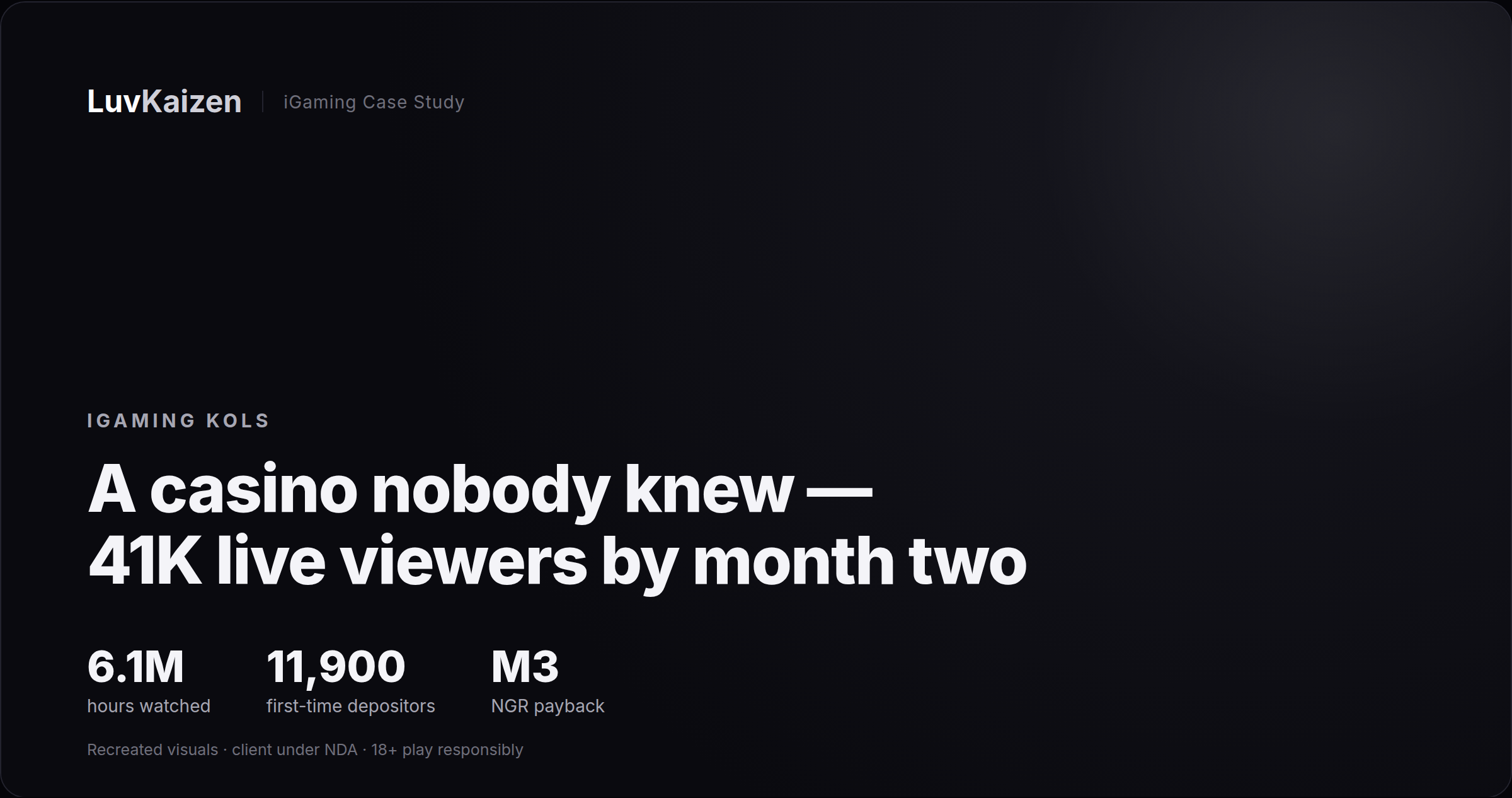
Quick answer: Crypto sportsbook marketing reaches wallet-ready bettors through the channels where they already spend time: KOL partnerships, Telegram communities, X distribution, and on-chain promotions. Because mainstream ad platforms restrict gambling and crypto ads, sportsbooks lean on influencer content and community channels, then measure success in first-time deposits rather than impressions.
Understanding the Crypto Bettor: Demographics, Behavior, and Motivation
Effective marketing starts with understanding the customer, and the crypto bettor is a distinct demographic with specific characteristics that should drive every marketing decision.
The typical crypto sportsbook user is male (85-90%), aged 21-40, and holds cryptocurrency as a meaningful portion of their financial portfolio. They are digitally sophisticated -- comfortable with wallet management, blockchain transactions, and decentralized applications. They tend to be globally distributed, with significant concentrations in markets where traditional sports betting is either restricted or where banking infrastructure makes fiat deposits difficult: Latin America, Southeast Asia, parts of Africa, and the Middle East. In regulated markets like the U.S. and U.K., crypto bettors skew toward users who value privacy and prefer not to share financial information with traditional bookmakers.
Their betting behavior differs from fiat bettors in several important ways. Crypto bettors tend to place larger individual bets (partly because crypto wealth is often concentrated and partly because the absence of banking intermediaries removes deposit friction). They bet across a wider range of sports and markets, including esports, MMA, and niche sports that traditional sportsbooks may not cover. They value fast withdrawals above almost everything else -- instant crypto withdrawals are the single most cited reason for choosing a crypto sportsbook over a traditional one. And they are less loyal to individual platforms than fiat bettors, in part because the ease of moving crypto between wallets makes switching costs effectively zero.
The motivational profile of the crypto bettor is also distinct. Beyond entertainment and profit potential, many crypto bettors are ideologically motivated by the principles of decentralization, financial sovereignty, and privacy. Marketing that acknowledges and validates these values resonates far more deeply than generic sportsbook promotion. Messages like "your bets, your wallet, your rules" connect with the underlying identity of the audience in a way that "best odds guaranteed" does not.
Understanding these characteristics shapes every downstream marketing decision: the channels you use, the creators you partner with, the messaging you craft, and the promotions you offer.
KOL Partnerships: The Crypto-Sports Intersection
KOL (Key Opinion Leader) partnerships are the primary acquisition channel for crypto sportsbooks, and the most effective partnerships exist at the intersection of crypto and sports audiences. Finding creators who authentically bridge both worlds is the key to high-ROI influencer campaigns.
The crypto-sports KOL landscape has three distinct segments. The first is crypto-native creators who cover gambling content -- YouTubers, streamers, and Twitter/X personalities who primarily cover crypto markets, DeFi, and Web3 but also engage in and discuss sports betting. These creators have the highest-value audiences because their followers are already holding crypto and are predisposed to gambling. Their endorsement carries significant weight because they are seen as authentic members of the crypto community, not hired promoters.
The second segment is sports content creators who accept crypto partnerships. These are traditional sports analysts, tipsters, and commentators on YouTube, Twitter/X, and podcasts who have crypto-savvy audience segments. They provide access to sports-focused audiences who may not yet be using crypto sportsbooks but are open to the proposition. The conversion path is longer, but the addressable audience is larger.
The third segment is gambling streamers who operate on platforms like Twitch, YouTube, and Kick. These creators broadcast live betting sessions, often for hours at a time, showing real-time wagers and results. The format is inherently engaging and provides extended brand exposure. However, this segment requires careful vetting -- the gambling streaming space has faced credibility issues, and partnering with creators who are perceived as inauthentic or irresponsible can damage brand reputation.
LuvKaizen's 5,000+ KOL network spans all three segments, and our data from 200+ campaigns shows consistent patterns in performance. Crypto-native creators with sports crossover appeal deliver the lowest cost-per-first-time-depositor (CPD), typically $80-150 depending on the creator's audience size and engagement rate. Sports creators with crypto-savvy audiences deliver higher CPD ($150-300) but often bring bettors with higher lifetime value. Gambling streamers deliver high volume but variable quality, with CPDs ranging from $50 to $400 depending on the streamer's audience composition.
The partnership structure for crypto sportsbook KOLs should include a base fee for content creation and distribution, a CPA (cost per acquisition) component for tracked registrations and deposits, and a revenue share component for ongoing value from referred bettors. This hybrid structure aligns incentives -- the creator is rewarded for both reach and conversion -- and provides the operator with performance data that enables optimization over time.
Content format matters enormously. The highest-converting KOL content for crypto sportsbooks is pre-match analysis with a platform integration ("I'm placing this bet on [platform] -- here's why"), live betting streams with real-time commentary, long-form reviews comparing crypto sportsbooks on key features (odds, withdrawal speed, market coverage), and Twitter/X threads combining sports analysis with platform promotion. Each format serves a different funnel stage, and the most effective campaigns deploy multiple formats per KOL.
Telegram and X Distribution: Reaching Crypto Bettors Where They Live
The crypto-native audience lives on Telegram and X (formerly Twitter). These two platforms account for the vast majority of crypto community activity, and they are the primary distribution channels for crypto sportsbook marketing.
Telegram is the operational hub of the crypto sportsbook marketing stack. Its value extends across the entire funnel: awareness, acquisition, retention, and reactivation. A crypto sportsbook's Telegram presence should include a public channel for promotional broadcasts (bonus announcements, odds boosts, major event promotions), a community group for discussion, tips sharing, and social engagement, VIP groups for high-value bettors with exclusive offers and dedicated support, and automated bots for odds feeds, bet tracking, and bonus code distribution.
Telegram's effectiveness for crypto sportsbook marketing stems from three factors. First, the audience is pre-qualified -- Telegram users in crypto groups are almost certainly holding crypto and are comfortable with crypto transactions. Second, the platform has no gambling content restrictions, unlike Facebook, Instagram, or TikTok. Third, the group and channel format enables both broadcast communication and two-way engagement, making it ideal for building the kind of community-driven retention described in our community building guide.
Growth strategies for Telegram include cross-promotion through KOL partnerships (every sponsored post should include a Telegram invite link), paid placements in established crypto Telegram channels, incentivized referral programs within the community, and content-driven growth through shareable picks, analysis, and win screenshots.
X (Twitter) serves a different but complementary function. While Telegram is the community hub, X is the discovery and amplification platform. Crypto sportsbooks should maintain active X accounts that combine sports analysis and picks (establishing credibility), promotional content (new features, bonuses, odds boosts), engagement with crypto and sports communities (quote tweets, replies, participation in trending conversations), and real-time content during major sporting events (live odds, in-play promotions, community predictions).
X's advertising platform is available for crypto sportsbooks in many jurisdictions and provides targeting capabilities that Telegram lacks. X ads can target users based on their follows (followers of crypto influencers, sports accounts, and competitor sportsbooks), their engagement with crypto and sports content, and their geographic location. These targeting options make X ads a viable paid acquisition channel, particularly for retargeting users who have engaged with organic content.
The Telegram-X flywheel works as follows: X content drives awareness and followers, X bios and pinned tweets direct users to the Telegram community, Telegram engagement deepens the relationship and drives deposits, and Telegram community content is reshared on X, expanding organic reach. This flywheel, once established, generates compounding growth without proportional increases in marketing spend.
Live Betting Content and Real-Time Marketing
Live betting (in-play betting) is the fastest-growing segment of sports betting, and it presents unique marketing opportunities for crypto sportsbooks. The real-time nature of live betting creates natural content moments that can be leveraged for acquisition and engagement.
The core concept is simple: live sporting events are moments of peak attention and emotional engagement for sports fans. Marketing that aligns with these moments captures attention that is otherwise extremely expensive to buy. Crypto sportsbooks that create compelling real-time content during major events can drive significant traffic and conversions.
The execution requires three components. First, a real-time content operation that can produce and distribute content within minutes of relevant sporting moments -- a goal scored, a red card issued, a key injury reported. This content should include updated odds, live betting promotions, and community engagement prompts ("Who's betting on a comeback?"). Second, distribution infrastructure that pushes this content simultaneously across Telegram, X, and any active KOL partnerships. Third, a technical backend that can handle the traffic spikes that successful real-time marketing generates.
The content formats that perform best during live events include odds movement alerts pushed to Telegram channels, X threads with real-time analysis and embedded bet links, KOL live streams on YouTube or Twitch with platform integration, and community prediction games where members compete against each other on in-play outcomes.
Crypto sportsbooks have a specific advantage in live betting marketing: instant deposits. When a bettor sees an in-play promotion during a live event, the window of opportunity is minutes, not hours. Traditional sportsbooks that require bank transfers or credit card deposits lose potential bettors to processing delays. Crypto sportsbooks that enable instant wallet deposits can capture these high-intent moments with zero friction. This advantage should be the centerpiece of live betting marketing: "See the odds? Fund your account in 30 seconds."
Major sporting events -- World Cup matches, Champions League finals, Super Bowl, boxing championships -- should be treated as tent-pole marketing events with dedicated campaigns planned weeks in advance. These campaigns should coordinate KOL activations, promotional offers, community events, and real-time content operations around the event schedule.
On-Chain Promotions and Web3-Native Incentives
Crypto sportsbooks have access to a category of promotional tools that traditional sportsbooks simply cannot replicate: on-chain promotions and Web3-native incentives. These tools leverage blockchain technology to create verifiable, transparent, and novel promotional mechanics that resonate deeply with crypto-native audiences.
Token-gated promotions are one of the most effective formats. By requiring users to hold a specific NFT or token to access exclusive betting markets, enhanced odds, or bonus offers, crypto sportsbooks create incentive for users to engage with the platform's token ecosystem while providing genuine exclusive value. The NFT or token itself becomes a marketing asset -- holders share their status on social media, driving organic awareness.
On-chain referral programs provide transparent, trustless attribution and reward distribution. When referral bonuses are paid via smart contract rather than through a centralized system, referrers can verify their earnings in real time on the blockchain. This transparency builds trust and encourages more active referral behavior. The smart contract can also enforce complex reward structures -- tiered referral bonuses, lifetime revenue share, or time-locked rewards -- without the operational overhead of manual tracking and payment.
Provably fair betting, while primarily a product feature, is also a powerful marketing differentiator. Crypto sportsbooks that publish their odds algorithms and enable on-chain verification of bet outcomes can market this transparency as a core value proposition. For crypto-native audiences who are skeptical of centralized authority, provably fair mechanics provide a compelling reason to choose a crypto sportsbook over a traditional one.
Gamified staking mechanics are another Web3-native promotional tool. Users can stake platform tokens to earn enhanced odds, cashback, or access to exclusive markets. This creates a dual incentive -- the token staking provides DeFi-style yield while the enhanced betting features provide iGaming value. The result is higher platform stickiness and increased token demand, both of which benefit the operator.
The key principle across all on-chain promotions is that they must provide genuine value, not just novelty. The crypto audience is sophisticated and has seen countless token-related gimmicks. Promotions that leverage blockchain technology to deliver real benefits -- better odds, transparent rewards, exclusive access -- will drive engagement. Promotions that use blockchain as a buzzword without substantive value will be dismissed.
Referral Programs and Affiliate Structures
Referral and affiliate programs are the backbone of crypto sportsbook distribution, and the most successful programs in 2026 are designed for the crypto-native ecosystem.
Traditional iGaming affiliate programs pay commissions based on referred players' net gaming revenue (NGR) -- the revenue the sportsbook earns after payouts. This model works but has limitations in the crypto space: affiliates are skeptical of operator-reported NGR figures, payment timing is slow, and the model does not leverage the transparency advantages that blockchain enables.
The most effective crypto sportsbook referral programs in 2026 use hybrid structures. A common model combines a CPA payment (paid in crypto immediately upon the referred user's first qualifying deposit) with a trailing revenue share (paid monthly based on the referred user's betting activity). This structure provides immediate gratification (the CPA payment) and long-term income (the revenue share), motivating affiliates to drive both volume and quality.
On-chain referral tracking, as mentioned in the previous section, adds a transparency layer that traditional programs lack. When affiliates can verify their referral counts and revenue share on the blockchain, trust increases and disputes decrease. Several crypto sportsbooks have implemented smart-contract-based affiliate programs that automatically distribute commissions based on verified on-chain activity, eliminating the need for monthly reports and manual payments.
The affiliate landscape for crypto sportsbooks includes several key segments. Crypto affiliate sites and comparison platforms drive high-intent traffic through SEO-optimized reviews and comparisons. Twitter/X KOLs with referral links drive community-level acquisition. Telegram group admins with embedded promotional content reach crypto-native audiences directly. YouTube reviewers with affiliate links in video descriptions capture long-form research traffic. And traditional iGaming affiliate networks that have expanded into crypto provide broad reach across multiple traffic sources.
Referral program design should also consider the anti-fraud measures necessary in the crypto space. Crypto's pseudonymous nature creates opportunities for referral fraud -- self-referrals, multi-account schemes, and bot-driven fake registrations. Effective countermeasures include deposit and wagering requirements before referral bonuses are paid, KYC (Know Your Customer) verification for bonus eligibility, and behavioral analysis to identify suspicious referral patterns.
Attribution Challenges and Measurement Frameworks
Marketing attribution for crypto sportsbooks is more complex than for traditional iGaming operators, and failing to build a robust measurement framework leads to misallocated budgets and missed optimization opportunities.
The attribution challenges are structural. Crypto transactions are pseudonymous -- a wallet address does not inherently link to a specific marketing touchpoint. Cross-platform journeys are common -- a bettor might discover the sportsbook through a Twitter/X post, join the Telegram community, click a KOL's referral link on YouTube, and finally deposit from a different device. The attribution window is often long -- crypto users may follow a sportsbook for weeks or months before depositing. And the lack of traditional tracking infrastructure (no cookies, no app store tracking for web-based crypto sportsbooks) eliminates many of the measurement tools that fiat operators rely on.
The measurement framework that works for crypto sportsbooks combines several data sources. First-party data from referral codes and affiliate links provides direct attribution for the last-click touchpoint. Post-registration surveys ("How did you hear about us?") provide self-reported attribution that captures awareness-driving channels that may not get last-click credit. UTM parameters on all external links provide click-level tracking across channels. And cohort analysis -- comparing registration and deposit patterns across time periods aligned with marketing campaigns -- provides incrementality estimates.
The most important shift in measurement mindset for crypto sportsbook marketers is moving from last-click attribution to incrementality-based measurement. Instead of asking "which channel gets credit for this deposit?" ask "how much additional deposit volume did this campaign generate compared to the baseline?" This approach is more robust to the attribution gaps inherent in the crypto ecosystem and provides more reliable data for budget allocation decisions.
KPI frameworks for crypto sportsbook marketing should track cost per first-time depositor (CPD) by channel, 30-day deposit retention rate by acquisition source, average deposit size and frequency by cohort, lifetime value (LTV) by acquisition channel, and blended customer acquisition cost (CAC) relative to LTV. The target LTV-to-CAC ratio for a healthy crypto sportsbook is 3:1 or higher -- for every dollar spent on acquisition, the operator should generate three dollars or more in lifetime revenue from the acquired bettor.
Practical Takeaways
- Know your bettor. Crypto bettors are male-dominated, digitally sophisticated, privacy-conscious, and ideologically aligned with decentralization. Marketing that acknowledges these values outperforms generic promotion.
- Build KOL partnerships at the crypto-sports intersection. The highest-ROI creators are those who authentically bridge both worlds. Use a hybrid compensation structure (base fee + CPA + revenue share) to align incentives.
- Lead with Telegram, amplify with X. Telegram is your community hub and retention engine. X is your discovery and amplification platform. Build the flywheel between them.
- Exploit the live betting advantage. Instant crypto deposits enable real-time conversion that traditional sportsbooks cannot match. Build real-time content operations around major sporting events.
- Use on-chain promotions for differentiation. Token-gated access, provably fair mechanics, and smart-contract referral programs provide genuine value and resonate with crypto-native audiences.
- Design referral programs for the crypto ecosystem. Instant crypto payments, on-chain transparency, and anti-fraud measures are essential for effective crypto sportsbook affiliate programs.
- Measure incrementality, not last-click. Attribution gaps are structural in the crypto ecosystem. Focus on incrementality-based measurement and cohort analysis for reliable budget allocation.
Conclusion
Crypto sportsbook marketing in 2026 is a specialist discipline that rewards operators who understand both the crypto and sports betting ecosystems. The audience is distinct, the channels are unconventional, and the measurement challenges are real. But the opportunity is enormous -- a global, growing market of wallet-ready bettors who value speed, privacy, and transparency.
The operators who will capture this market are those who build authentic relationships with crypto-sports KOLs, establish Telegram communities that drive retention, create real-time content operations around live events, leverage on-chain tools for differentiated promotions, and measure their marketing with incrementality frameworks that account for crypto's unique attribution challenges.
LuvKaizen has been marketing to crypto-native audiences since 2019. Our network of 5,000+ KOLs includes hundreds of creators at the crypto-sports intersection, and our campaign track record of up to 11x ROI demonstrates that we know how to reach wallet-ready bettors and drive measurable results. Contact our team to build a crypto sportsbook marketing strategy that delivers.
Related reading
- iGaming Affiliate Marketing: The Operator's Revenue Share Playbook
- iGaming Community Building: Telegram, Discord & Reddit Playbook
- iGaming Content Marketing: SEO-Driven Player Acquisition Strategy
- iGaming Influencer Marketing: The Complete 2026 Playbook
- iGaming KOL Marketing: Finding, Vetting & Managing Casino Streamers
- Top 10 iGaming Marketing Trends 2026: AI, Clipping & Crypto-Native Acquisition
Other Blogs
How Much Do Crypto Ads Cost in 2026? CPMs and CPCs by Channel
Real crypto advertising rates by channel: ad networks, Google, X, Telegram, KOLs and clipping compared on cost per 1,000 views and per click.
read blog
Top Kick Streamers in 2026: The Most-Followed Channels Ranked
The most-followed Kick streamers in 2026, what they stream, why LatAm creators dominate the platform, and how brands actually get placements.
read blog
Clipping Agency Pricing in 2026: Rates, CPMs and Models Compared
Real clipping campaign costs in 2026: CPM ranges, pricing models compared, budget examples and the questions that expose overpriced clipping offers.
read blog
Streamer Clipping: How Streams Become Short-Form Reach
How streamer clipping works: the rights-to-verified-views pipeline, real economics for brands and clippers, compliance, and DIY vs managed programs.
read blog
Top Casino Streamers in 2026: Who Moves Audiences
Who the top casino streamers are in 2026, what each tier costs to sponsor, and how operators should pick partners beyond the biggest names.
read blog
How to Hire Casino Streamers: 2026 Operator's Guide
The operator's guide to hiring casino streamers: platforms, vetting, deal structures, rates from $500 to $50K+, and compliance rules by market.
read blog
How to Choose a Crypto Market Maker: 2026 Founder's Guide
Engagement models, contract KPIs, red flags and a 7-step checklist for picking a market maker before your token launch.
read blog
Casino VIP Programs: How to Build One That Keeps High Rollers
Tier design, host playbooks and offer economics: building a VIP program that protects the players who drive most of your GGR.
read blog
Casino Player Retention: The 2026 Guide to Keeping Depositors Active
Most casinos lose 60-80% of new depositors in 30 days. The metrics, flows and mechanics that fix it.
read blog
What Is a Telegram Casino? How They Work and How They Grow
Mini-app casinos, TON payments and one-tap deposits: how Telegram became gambling's fastest-growing surface.
read blog
How to Start a Crypto Casino in 2026: Licensing, Software, Costs and Growth
Licensing, software, payments, budgets and the launch plan: what it actually takes to start a crypto casino in 2026.
read blog
iGaming Affiliate Marketing and Influencer Promotion: How Operators Combine Both in 2026
Affiliates and influencers have merged into one deal market. How operators structure, track and price the hybrid channel in 2026.
read blog
Robinhood Chain vs Base vs Solana: Where to Launch in 2026
An honest comparison on audience, distribution, tooling, liquidity and cost, with a clear pick for each.
read blog
The Robinhood Chain KOL Marketing Playbook
Creator archetypes, vetting, briefing and launch sequencing for a chain most audiences have not added yet.
read blog
How to Launch a Token on Robinhood Chain (2026 Guide)
Step-by-step: network setup, bridging, contract verification, pools.trade mechanics and the launch marketing timeline.
read blog
Robinhood Chain Explained for Crypto Marketers
What Robinhood Chain is, who is actually on it, and how its retail audience changes your go-to-market.
read blog
What Is a Micro-Influencer? Tiers, Rates and How to Find Them in 2026
What actually counts as a micro-influencer, what they charge, and when 50 micros beat one macro name for reach and trust.
read blog
Kalshi Promo Code Guide: What Actually Exists in 2026
No universal Kalshi promo code exists. Here's what's real (referral credits), the scams targeting this search, and how to check today's actual offer.
read blog
Token Farming Explained: Airdrop Farmers, Points Meta and How Projects Fight Back
Token farmers industrialize airdrop hunting. How farming works, what it earns, and how projects design campaigns that survive it.
read blog
Polymarket Invite Codes and Referrals: What Actually Exists in 2026
What's real behind 'Polymarket invite code' searches: how prediction-market referral mechanics work, what to avoid, and what operators can learn.
read blog
What Is a UGC Creator? Meaning, Rates and How to Become One
UGC creators make branded content without needing an audience. What the job is, what it pays, how to start, and how brands should hire.
read blog
Clip Farming: What It Is, How It Works, and How Brands Use It
The complete guide to clip farming: what it means, how clippers industrialize short-form views, what it pays, and how brands harness it safely.
read blog
GEO vs SEO: What's the Difference and Which Do You Need?
Rankings vs citations: what actually differs between SEO and GEO, why they compound, and how to split budget between them in 2026.
read blog
iGaming Clipping Compliance: Licensed Markets, Disclosures and Age Rules
The compliance stack for gambling clip campaigns: where clips can run, what must appear on screen, and how to evidence it — before regulators ask.
read blog
Verified Views: How to Audit a Clipping Campaign for Bot Traffic
The fight in clipping has moved from reach to whose views are real. Here's the audit methodology we run — and invite clients to run on us.
read blog
How Much Does a Clipping Campaign Cost in 2026?
Real 2026 clipping price points across bounty platforms and managed agencies, what a wave includes, and how to budget by goal.
read blog
Whop Clipping and Content Rewards: The Complete 2026 Guide
What Whop clipping and content rewards actually are, what clippers earn, what brands really pay, and where the model breaks — explained for both sides.
read blog
iGaming Affiliate CPA Rates 2026: Benchmarks by Geo and Vertical
The 2026 CPA, RevShare and hybrid benchmarks operators actually sign, by geo tier and vertical, plus the levers that move your rate.
read blog
How to Attribute Clipping Views to FTDs (Without Click Paths)
Clips rarely carry clickable links. These are the four attribution methods that still tie views to first-time depositors, and how to contract them upfront.
read blog
Cost per FTD in iGaming: 2026 Benchmarks and Your CAC Ceiling
FTD benchmarks by channel, geo tier and vertical, plus the LTV method for deciding the most you can afford to pay for a depositor.
read blog
Clipping vs Affiliate CPA for iGaming: The Cost per FTD Math
Affiliates price the depositor. Clipping prices attention. Here's the honest math that converts clip views into cost per FTD, and when each channel wins.
read blog
iGaming Affiliate Marketing: The Operator's Revenue Share Playbook
The definitive operator's playbook for iGaming affiliate marketing, covering RevShare, CPA, and hybrid commission models, affiliate vetting, compliance frameworks, and scaling strategies for crypto casinos.
read blog
Crypto Gambling Marketing: Navigating Compliance While Scaling Player Acquisition
Navigate the complex compliance landscape of crypto gambling marketing across jurisdictions, from KOL disclosure rules and platform policies to building a compliance-first marketing operation that scales.
read blog
iGaming Content Marketing: SEO-Driven Player Acquisition Strategy
Build an iGaming content marketing strategy that drives organic player acquisition through keyword clustering, content funnels, ROI measurement, and scalable production.
read blog
Top 10 iGaming Marketing Trends 2026: AI, Clipping & Crypto-Native Acquisition
Discover the top 10 iGaming marketing trends shaping 2026, from AI-generated content and stream clipping operations to crypto-native acquisition and KOL-led campaigns driving operator growth.
read blog
Short-Form Video for iGaming: TikTok, Reels & Shorts Playbook 2026
The definitive 2026 playbook for iGaming short-form video covering TikTok, Reels, and Shorts strategies for casino and betting brands navigating restricted advertising markets.
read blog
Casino Influencer Compliance: Disclosure, Responsible Gambling & Platform Rules
Navigate casino influencer compliance with this comprehensive guide to disclosure requirements, responsible gambling messaging, platform rules, and audit processes.
read blog
iGaming KOL Marketing: Finding, Vetting & Managing Casino Streamers
Learn how to find, vet, and manage casino streamers and KOLs across Twitch, Kick, YouTube, and X for measurable player acquisition with campaigns that deliver up to 11x ROI.
read blog
Casino UGC Marketing: Why Creator Content Wins in Regulated Markets
Discover why user-generated content outperforms paid ads for casino and sportsbook operators in regulated markets, and how to build a scalable UGC program with proper creator sourcing, compliance, and ROI measurement.
read blog
iGaming Community Building: Telegram, Discord & Reddit Playbook
Master iGaming community building on Telegram, Discord, and Reddit with proven strategies for player retention, engagement mechanics, and converting members to depositors.
read blog
The Rise of Sweepstakes Casinos: Marketing Strategy Guide for 2026
A comprehensive guide to sweepstakes casino marketing in 2026, covering social media strategies, influencer partnerships, SEO, community building, and paid acquisition tactics.
read blog
How Casino Brands Use Clipping to Replace Banned Ads With Organic Reach
Learn how casino brands use stream clipping to bypass ad bans and drive organic reach through scalable content operations, compliance frameworks, and multi-platform distribution.
read blog
Sports Betting Influencer Marketing: Beyond the Tipster Model
Move beyond tipster-only sports betting influencer strategies. Learn how lifestyle creators, match-day content, and multi-platform campaigns drive sustainable FTD growth.
read blog
How to Market a Crypto Casino in 2026: The Full Playbook
The complete crypto casino marketing playbook for 2026 covering KOL strategy, SEO, UGC, affiliate programs, community building, and on-chain attribution for operators looking to scale player acquisition.
read blog
iGaming SEO: The Complete 2026 Guide to Ranking Casino & Sportsbook Sites
Master iGaming SEO in 2026 with this comprehensive guide covering technical foundations, keyword strategy, content architecture, link building, and AI Overview optimization for casino and sportsbook sites.
read blog
Blockchain UGC Content Strategy: Making Technical Products Legible
How to build UGC for technically complex blockchain products, from creator archetypes to measurement tied to testnet activity.
read blog
Crypto UGC Agency vs Freelancers vs In-House: Real Costs Compared
Four production models priced honestly, including management hours and rework, with a decision framework by monthly asset volume.
read blog
How to Choose a Crypto UGC Agency in 2026
A nine-criteria evaluation framework, a weighted scorecard, and the sales-call answers that should end the conversation.
read blog
Crypto UGC Hooks That Convert: 12 Formats With Examples
Twelve proven crypto UGC hook formats with example script openings, funnel fit, failure modes, and a system for testing hooks and reading win rates.
read blog
The Web3 UGC Creator Program Playbook
How to stand up a crypto creator program inside a Web3 community: tiers, incentives, briefs, QA, payouts, anti-farming controls and a 30/60/90 day rollout.
read blog
Crypto KOL List 2026: How to Build One That Actually Converts
Most crypto KOL lists rank by follower count, which predicts almost nothing. Here are the seven fields that actually forecast whether a placement converts.
read blog
Crypto Media List 2026: Outlets, Tiers, Link Types and Turnaround
The crypto media list most PR providers will not show you: how outlets tier, what dofollow status is worth, and the five fields to demand before paying.
read blog
Crypto Guest Posting Sites: Where to Publish in 2026
The crypto guest posting landscape in 2026: which sites accept contributions, what placements cost, and how to build links that actually move rankings.
read blog
Best Crypto Subreddits to Follow in 2026
The crypto subreddits actually worth following in 2026 (news, trading, DeFi and dev communities), plus how to market on Reddit without getting banned.
read blog
Top Crypto Discord Servers to Join in 2026
The best crypto Discord servers in 2026 across trading, DeFi, NFT, developer and ecosystem communities, and what makes a server worth joining.
read blog
The TGE Checklist: What to Lock Before You Launch
The pre-launch checklist that separates TGEs that build a base from launches that spike and die.
read blog
TGE vs ICO vs IDO vs IEO: What's the Difference?
The four token launch models explained, and which one actually fits your project in 2026.
read blog
Crypto Newsletter Sponsorships: The 2026 Guide (Pricing, Top Letters, Playbook)
How to buy crypto newsletter sponsorships that convert: pricing benchmarks, list vetting, formats, and the multi-send playbook.
read blog
Crypto KOL Marketplace vs. Agency: Which Gets You Better ROI in 2026?
Self-serve KOL marketplace or managed agency? A practical comparison of cost, speed, vetting and ROI, and when hybrid wins.
read blog
How Much Does a Crypto Press Release Cost in 2026? (Real Pricing by Outlet)
Real 2026 pricing for crypto press releases: per outlet, per wire bundle, and per top-tier placement, plus the hidden fees nobody mentions.
read blog
Where to Submit a Crypto Press Release in 2026 (15+ Outlets & Wires Compared)
Every serious option for crypto press release submission in 2026 (top-tier media, newswires, aggregators) with pricing benchmarks and pickup expectations.
read blog
Crypto Link Building: How to Get Backlinks That Actually Rank (2026)
Quality crypto backlinks are scarce, which is why they work. Seven tactics that earn links editors actually give, plus the traps that get web3 sites penalized.
read blog
Best Crypto SEO Tools in 2026 (What We Actually Use)
From keyword research to AI-citation tracking: the SEO tool stack we use across 100+ web3 projects, with what each tool is actually good for.
read blog
IDO Marketing Guide 2026: How to Launch a Token Sale That Sells Out
The hype-only IDO model is dead. Here's the 2026 playbook: launchpad selection, alpha-group KOLs, whitelist gamification and a week-by-week timeline.
read blog
AEO & GEO for Crypto: How to Get Cited by ChatGPT, Perplexity & AI Overviews
Over half of Google queries now trigger AI Overviews. Here's how crypto projects get cited by ChatGPT, Perplexity and Gemini: the complete AEO/GEO playbook.
read blog
How to Market a Crypto Exchange in 2026: The Complete Playbook
Registrations are easy; funded accounts are the business. The full 2026 playbook for CEX and DEX user acquisition: channels, budgets and metrics.
read blog
How to Become a Crypto Marketer in 2026 (Salaries, Skills, Paths)
Salary bands, real skills, and the fastest path in, from a team that hires crypto marketers.
read blog
How to Get People to Buy Your Crypto: The 2026 Demand Playbook
Demand = narrative × distribution × trust. The honest playbook, step by step.
read blog
What Does a Crypto Marketing Agency Do? (And When to Hire One)
The services, the costs, the red flags, and when an agency beats in-house.
read blog
KOL Campaign Wallet Activation Benchmarks (2026)
What a KOL campaign actually produces in funded wallets: 2026 planning bands by product category, funnel math, attribution setup, and the three decisions the numbers drive.
read blog
Crypto Casino Marketing Strategies That Work in 2026
Eight crypto casino marketing strategies that actually work in 2026, with cost bands per channel and a plan for combining them at test, scale, and aggressive budgets.
read blog
Crypto KOL Rate Report 2026: Real Rates From a 5,000+ Creator Network
Real 2026 crypto KOL rates from 5,000+ creators and 200+ campaigns: per-tier pricing, platform premiums, exclusivity costs and what each budget actually buys.
read blog
Whop Clipping vs Managed Clipping: Which Should You Run?
Whop clipping bounties vs managed clipping campaigns: real rates, fraud risk, compliance, and a decision framework for crypto teams.
read blog
UGC Video Rates 2026
UGC video rates in 2026: marketplaces charge $25–120 per video, managed campaigns run $15K–$100K+. Rate tables, crypto premiums, and budget guides.
read blog
Top Prediction Market KOLs to Watch in 2026
The prediction market KOLs to know in 2026: Domer, French Whale, Swiss Tony, Gunther Eagleman, PredMTrader, plus the archetypes brands actually hire.
read blog
Top Crypto TikTok Influencers & Instagram Creators 2026
The 6 types of crypto TikTok influencers and Instagram creators that matter in 2026, typical rates by tier, and how to vet them before you pay.
read blog
Short Form Video ROI Benchmarks 2026
Short form video ROI benchmarks 2026: #1 ROI format for up to 77% of marketers, 200B+ daily Shorts views, $1–5 clipping CPMs. Every stat sourced.
read blog
MiCA Licensing Guide 2026: Licensed or Locked Out
MiCA licensing in 2026: who needs a CASP license, €50k–€150k capital, real costs, timelines, jurisdictions, and the 1 July grandfathering cutoff.
read blog
Kick Streamer Casino Sponsorships Guide
How Kick streamer sponsorships work in 2026: casino rates, deal structures, platform rules, picking streamers, and clipping streams for reach.
read blog
Kalshi Marketing Playbook: How a $22B Exchange Grew
Kalshi marketing teardown: $17.7M TV, celebrity ads, a CNBC data deal, $500-per-post affiliates. What worked, what regulators flagged, where KOLs fit.
read blog
How to Make Crypto Videos Go Viral
How to make crypto videos go viral: hooks, clipping distribution, and policy arbitrage. One 60-min AMA yields 40–60 clips. The 2026 playbook.
read blog
The Crypto Exchange KOL Playbook
How crypto exchange KOL programs work: Binance, Bybit, Bitget, MEXC and Gate numbers, CPA vs rev-share math, and what in-house programs miss.
read blog
Casino Influencer Marketing Cost
Casino influencer marketing cost in 2026: $500–$5K mid-size streamers, $10K–$50K+ top creators, $50–$250 CPA per FTD. Full rate tables and budget plans.
read blog
Crypto Marketing Agency vs In-House: Which Is Right?
Agency or in-house for crypto marketing? An honest cost/benefit breakdown.
read blog
12 Best Crypto Community Management Tools in 2026
The tools that keep crypto Telegram and Discord communities safe and active.
read blog
The Crypto Marketing KPIs That Actually Matter in 2026
The metrics that prove (or disprove) your crypto marketing is working.
read blog
Is Crypto KOL Marketing Worth It? (Honest 2026 Take)
An honest take on when crypto KOL marketing pays off, and when it doesn't.
read blog
DeFi Marketing Strategy: A 2026 Playbook
How to market DeFi to skeptical, yield-savvy users and grow TVL.
read blog
How to Make a Meme Coin Go Viral in 2026
The mechanics behind memecoins that actually go viral.
read blog
Meme Coin Marketing Strategy: A 2026 Framework
A repeatable framework for memecoin marketing that compounds.
read blog
How to Market a Crypto Presale in 2026 (Step-by-Step)
The step-by-step playbook to sell out a crypto presale.
read blog
Crypto Influencer Marketing ROI: How to Measure It
How to actually measure and improve KOL campaign ROI.
read blog
How to Find Crypto Influencers (and Vet Them) in 2026
How to find and vet crypto KOLs that actually drive results.
read blog
How to Grow a Crypto Community in 2026 (Telegram & Discord)
A practical guide to building an active crypto community that lasts.
read blog
8 Best Crypto Ad Networks in 2026 (Compared)
The top crypto ad networks compared for reach, formats and cost.
read blog
How to Advertise Crypto in 2026 (Networks & Rules)
Where and how to run crypto ads that don't get banned.
read blog
How to Get Listed on CoinGecko (2026 Guide)
Everything you need to get your token listed on CoinGecko.
read blog
How to Get Listed on CoinMarketCap (2026 Guide)
A step-by-step guide to getting your token listed on CoinMarketCap.
read blog
9 Crypto Marketing Trends to Watch in 2026
The crypto marketing trends defining 2026, and how to use them.
read blog
Crypto Marketing Plan: Free 2026 Template & Framework
A copy-and-use crypto marketing plan template with timeline and KPIs.
read blog
What Sets Us Apart
Strategic marketing solutions tailored for the decentralized future

Blockchain Marketing Expertise
We understand DeFi, NFTs, and crypto projects inside and out. We make your project more visible and get more people using it.

24/7 Community Management
We build active Web3 communities people want to join. We handle moderation and protect from scammers and spam.

Crypto Native PR & Media
We get your project featured in crypto publications and connect you with blockchain influencers who matter.

Data-Driven Growth Hacking
We use real blockchain data to improve your marketing. Just strategies that work based on actual numbers.

Comprehensive Web3 Services
We handle everything from token launches to Web3 branding to app promotion. One team for all marketing needs.

Proven Blockchain Success
We've helped over 100 Web3 projects grow since 2019, including DeFi protocols, NFT marketplaces, and Layer 2 solutions.
We’re thrilled to dive into your Web3 project and uncover how LuvKaizen can supercharge your growth!
Here’s the agenda for our call:
Intro and what is LuvKaizen
Project or/and whitepaper overview
Your core marketing goals
How the LuvKaizen process works
Any questions about Web3 marketing
We look forward to discussing how LuvKaizen can accelerate your Web3 project’s success and help you achieve your goals.
See you soon!
Oops! Something went wrong while submitting the form.