-3.svg)
Short-Form Video for iGaming: TikTok, Reels & Shorts Playbook 2026
August 2, 2026
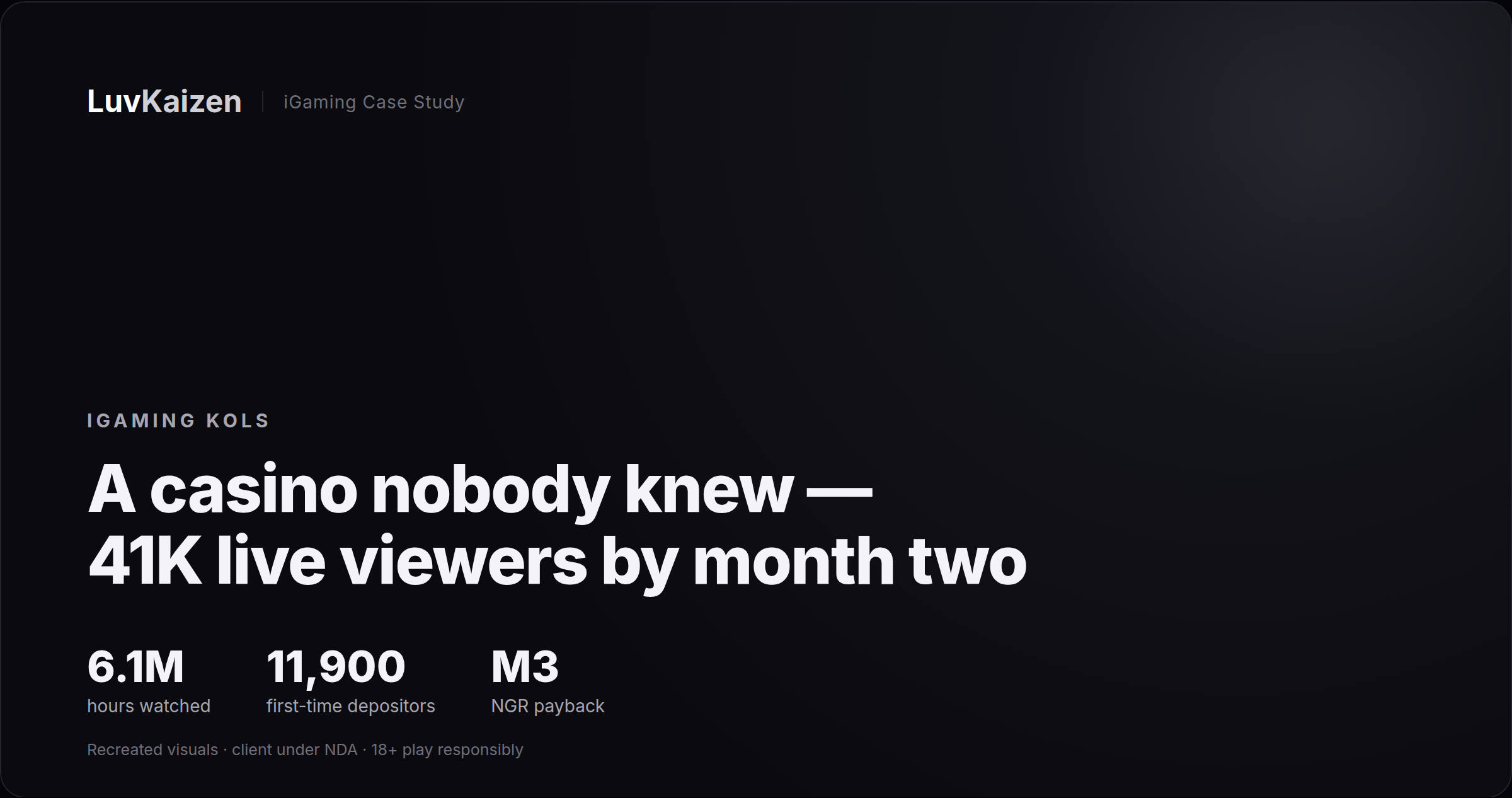
Quick answer: Short-form video works for iGaming brands through TikTok, Instagram Reels, and YouTube Shorts, where organic creator content reaches audiences that restricted advertising policies block from paid ads. The 2026 playbook favors clipped streamer highlights, compliant creator briefs, and platform-specific formats, with each network's gambling rules dictating what content survives.
Short-form video has become the most important organic acquisition channel for iGaming operators who cannot rely on paid advertising. While casino and sportsbook brands face advertising bans or severe restrictions on every major platform, organic short-form video operates under a completely different ruleset. A 45-second slots clip on TikTok can reach 500,000 viewers without spending a dollar on media. A YouTube Short reviewing a casino's withdrawal speed can drive registrations for months. An Instagram Reel showing a live bet win can go viral in markets where paid gambling ads are prohibited.
The math is straightforward. In 2026, TikTok, YouTube Shorts, and Instagram Reels collectively reach over 3 billion daily active users. Gambling content on these platforms generates billions of views per month, almost entirely through organic distribution. The operators capturing this attention are acquiring players at 50-70% lower cost-per-FTD than those relying on paid channels, with higher lifetime values because organically acquired players tend to be more engaged.
But producing effective short-form video for iGaming is not the same as producing it for fashion, food, or fitness. The compliance requirements are stricter, the platform policies require careful navigation, and the content strategies that work are specific to the gambling vertical. This playbook covers everything: why short-form dominates in restricted verticals, clipping versus original content production, platform-specific strategies, compliance on each platform, viral formats, creator partnerships, and a measurement framework that connects video performance to revenue.
Why Short-Form Is the Top Channel for Restricted Verticals
Short-form video's dominance in iGaming is not accidental. It is a structural consequence of the restrictions that define gambling marketing.
Advertising restrictions create an organic content vacuum. Google, Meta, and TikTok all restrict or prohibit paid gambling advertising. This means the paid channels that dominate acquisition in unrestricted verticals (e-commerce, SaaS, D2C) are largely unavailable to iGaming operators. Organic content fills this vacuum. When you cannot buy reach, you must earn it. Short-form video is the most efficient format for earning organic reach because the algorithms on TikTok, YouTube, and Instagram are designed to surface engaging content regardless of follower count or advertising spend.
Algorithmic distribution favors new and niche content. TikTok's recommendation algorithm explicitly promotes content from smaller accounts to test engagement before showing it to larger audiences. This means a new casino creator account with 500 followers can produce a video that reaches 100,000+ viewers if the content resonates. This algorithmic structure democratizes reach in a way that paid advertising never can, and it disproportionately benefits verticals like iGaming where paid distribution is restricted.
Short-form matches gambling content perfectly. The core appeal of gambling is excitement, tension, and resolution: will the spin hit, will the bet land, will the bonus round pay. These are inherently short-form narratives. A big win on a slot machine unfolds in 10-30 seconds. A live bet resolution happens in real time. A bonus round plays out in under a minute. Gambling content does not need to be forced into the short-form format. It naturally fits.
Mobile-first consumption aligns with gambling behavior. Over 75% of online gambling sessions now occur on mobile devices. Users scrolling TikTok or Reels are on the same device they would use to deposit and play. The path from watching a casino clip to registering and depositing is frictionless: tap the link in bio, sign up on mobile, deposit with Apple Pay or crypto, and start playing within minutes. No channel change, no device switch, no friction.
Compounding returns differentiate organic video from paid campaigns. Every video you publish continues to generate views and engagement indefinitely. A library of 500 short-form videos across platforms creates a permanent acquisition asset that compounds over time. After 12 months of consistent publication, the aggregate monthly reach of your video library can exceed what even a substantial paid media budget would achieve, and unlike paid, it does not stop when you stop spending.
Clipping vs. Original Content: When to Use Each
iGaming short-form video production falls into two categories: clipping existing content (streams, long-form videos) into short-form clips, and producing original short-form content from scratch. Each has distinct advantages and optimal use cases.
Clipping is the process of taking highlights from long-form content, typically live streams or YouTube videos, and editing them into standalone short-form clips. A four-hour casino stream might yield 10-20 clips of big wins, funny reactions, tense moments, or notable commentary. Clipping is the most cost-efficient content production method: a skilled editor can produce 15-25 clips per day at a cost of $5-20 per clip.
When clipping works best: You have existing long-form content (streams, session recordings) that contains naturally exciting moments. The KOL or streamer has an existing audience on long-form platforms that can be extended to short-form. You need high-volume content output (50-200+ clips per month) at low per-unit cost. The content is genuine and unscripted, which resonates authentically with short-form audiences.
Original content is produced specifically for short-form platforms. This includes scripted reviews, formatted gameplay clips with overlays and captions, reaction-style content, comparison videos, and trend-based content that leverages platform-specific viral formats. Original content typically costs more per unit ($50-300 per piece) but offers greater creative control and can be optimized for specific platform algorithms.
When original content works best: You are targeting specific keywords or topics (e.g., "best crypto casino for slots"). You need content tailored to a platform's current trending formats. You are building a brand-owned content channel rather than relying on creator distribution. The content requires specific production elements (graphics, data overlays, structured comparisons) that do not occur naturally in streams.
The optimal mix for most iGaming operators is 60-70% clipped content and 30-40% original content. Clipping provides volume and authenticity. Original content provides strategic targeting and creative control. Together, they create a diversified content portfolio that performs across platforms and audience segments.
Clipping operations at scale require: source content pipeline (partnerships with streamers who grant clipping rights), a clipping team (in-house or agency), a brief template specifying clip criteria (minimum excitement level, brand mentions, win thresholds), a review and approval process, and a publishing workflow with platform-native formatting. At LuvKaizen, our clipping operation produces 500+ clips per month across client accounts, drawing from a source library of 1,000+ hours of monthly streamer content.
Platform-Specific Strategies
Each platform has distinct algorithmic behaviors, audience demographics, and content norms that require tailored strategies. Cross-posting identical content across platforms underperforms platform-native content by 40-60% in engagement metrics.
TikTok Strategy
TikTok offers the largest organic reach opportunity for iGaming content. The algorithm's emphasis on content quality over follower count means that even new accounts can achieve viral reach with compelling content.
Content format specifications: Vertical video (9:16 aspect ratio), 15-60 seconds optimal length (though TikTok supports up to 10 minutes, short performs best for gambling content), text overlays for sound-off viewing (40% of TikTok viewing occurs without sound), and a hook within the first 1.5 seconds that creates curiosity or tension.
Algorithm optimization: TikTok's recommendation algorithm weighs: watch-through rate (percentage of viewers who watch to completion), replay rate, shares, comments, and saves. For iGaming content, the strongest algorithm signals come from tension-and-resolution clips where viewers watch to see the outcome. "Will this $100 spin hit the bonus?" generates high completion rates because viewers want to see what happens. Use cliffhanger-style editing: show the bet being placed, build tension, then reveal the result.
Hashtag strategy: Use a mix of niche hashtags (#slotsonline, #casinowins, #bigwinslots, #cryptogambling) and trending general hashtags. Do not overload with hashtags; 3-5 targeted tags per post is optimal. Monitor which hashtags drive discovery in your niche and rotate regularly as hashtag effectiveness shifts.
Posting cadence: 1-3 posts per day, 7 days per week. TikTok rewards consistency. Accounts that post daily maintain higher algorithmic visibility than those posting sporadically. Maintain a content buffer of 2 weeks to ensure consistent output.
YouTube Shorts Strategy
YouTube Shorts combines TikTok-style discovery with YouTube's search infrastructure and content longevity. It is the best platform for evergreen iGaming short-form content.
The search advantage: YouTube Shorts appear in Google search results and YouTube search results. A Short titled "How Fast Are Stake Casino Withdrawals?" can rank for that query and generate registrations for months or years. Optimize Short titles and descriptions for search keywords relevant to your casino or sportsbook.
Content format: Vertical (9:16), up to 60 seconds. YouTube Shorts supports more informational content than TikTok: mini-reviews, feature comparisons, and educational clips perform well alongside entertainment-focused win clips. The audience is more willing to watch content with a learning or decision-making purpose.
Long-form funnel: Use Shorts as a top-of-funnel driver to your main YouTube channel's long-form content. A 45-second Short showing a casino's game lobby can end with "Full review on our channel" driving viewers to a 10-minute detailed review. This funnel converts at higher rates than direct link-out because viewers who consume both short and long-form content have higher trust and intent.
Posting cadence: 1-2 Shorts per day. YouTube's algorithm for Shorts rewards consistent posting but is less aggressively volume-dependent than TikTok's.
Instagram Reels Strategy
Instagram Reels reaches a demographic that often aligns with high-value casino players: slightly older (25-44 core), higher disposable income, and strong presence in European and Latin American markets.
Content format: Vertical (9:16), 15-90 seconds. Instagram's audience responds well to polished, lifestyle-integrated content. Casino content that feels aspirational, showing the experience of playing at a premium casino, works better on Instagram than raw, unedited gameplay clips. Production value matters more on Reels than on TikTok.
Instagram's social graph advantage: Unlike TikTok, Instagram distributes content through social connections, not just algorithmic recommendation. This means Reels are shared within social networks, creating a word-of-mouth amplification effect. Casino content that is shareable (surprising wins, entertaining reactions, controversial takes) benefits disproportionately on Instagram.
Stories integration: Complement Reels with Instagram Stories that drive urgency: limited-time bonus codes, event-based promotions, and behind-the-scenes content. Stories create a daily touchpoint that maintains engagement between Reel publications.
Posting cadence: 4-7 Reels per week. Instagram penalizes accounts that post too frequently (more than 2 Reels per day) by reducing per-post reach. Focus on quality over quantity on this platform.
Compliance on Each Platform
Navigating compliance for iGaming short-form video requires understanding both platform-specific policies and jurisdiction-specific regulations. Getting this wrong results in content removal, account bans, or regulatory penalties.
TikTok compliance: TikTok's community guidelines prohibit content that "promotes gambling services." However, this policy is applied to advertising, not organic content. Organic content showing gambling gameplay, reviews, or commentary is generally permitted as long as it does not contain direct calls to action like "Sign up and deposit now using my link." The practical boundary: show and discuss gambling freely, but keep promotional language implicit rather than explicit. Include responsible gambling messaging in captions. Do not target content at users under 18 (TikTok's algorithms will suppress content flagged as targeting minors).
YouTube compliance: YouTube's gambling content policy permits organic gambling content from creators who are 18+ and whose content is age-gated appropriately. Gambling content is not eligible for the YouTube Partner Program (no ad revenue), but this does not affect organic reach or Shorts distribution. YouTube is the most permissive major platform for iGaming content. Include responsible gambling links in video descriptions.
Instagram compliance: Instagram's gambling advertising policies restrict paid promotions but do not prohibit organic gambling content. Reels showing gameplay, wins, or casino reviews are permitted under community guidelines. Instagram may age-restrict gambling content, limiting its distribution to verified 18+ accounts. This reduces reach but improves audience quality. Include responsible gambling hashtags and disclaimers in captions.
Cross-platform compliance fundamentals that apply regardless of platform: always disclose paid partnerships using platform-native tools (paid partnership labels, promotion checkboxes), never guarantee winnings or make misleading claims about odds, include responsible gambling messaging in every piece of content, never target or appeal to minors (avoid juvenile visual elements, trending sounds popular with under-18 audiences, or content formats primarily consumed by minors), maintain records of all published content for regulatory audit purposes.
Jurisdiction-specific requirements layer on top of platform policies. UK-targeted content must comply with the ASA's CAP Code for gambling advertising, including mandatory responsible gambling messaging and restrictions on content that appeals to under-18s. EU markets have varying requirements. US state-by-state regulations add further complexity. Build a compliance matrix mapping platform requirements and jurisdictional requirements for every market you target.
Viral Formats for Casino and Betting Content
Certain content formats consistently outperform in the iGaming short-form space. These formats leverage the inherent drama of gambling and align with the algorithmic preferences of major platforms.
The "Will It Hit?" format is the highest-performing format in iGaming short-form. Structure: show a bet being placed (high tension), build anticipation through the spin/event/hand, and reveal the outcome. The cliffhanger structure drives completion rates above 80%, which is the single most important algorithm signal across all platforms. Variations include: max bet bonus hunts, last-spin drama (creator is down to their last spin before walking away), and bet accumulators where each leg builds tension.
Win compilations aggregate multiple wins into a highlight reel set to trending music. These perform well because they deliver multiple dopamine hits in a single video. Structure them with ascending value: start with moderate wins and build to the biggest hit. Optimal length is 30-45 seconds with 4-6 wins per compilation.
"I Tested" comparative format. "I tested 5 crypto casinos' withdrawal speed -- here's what happened." This format combines entertainment with utility, attracting viewers who are in the research/consideration phase of their player journey. These convert at higher rates than pure entertainment content because they attract intentful viewers.
Reaction and commentary format. Creators reacting to their own or others' gambling clips provide a layer of personality and commentary that makes the content feel personal rather than promotional. Duets and stitches on TikTok, reaction overlays on Shorts and Reels. This format benefits from the engagement mechanics of the original content while adding the creator's personal brand.
The "Challenge" format. "Starting with $50 and trying to reach $500 in 30 minutes." Challenge content creates narrative arcs within short-form constraints. Viewers follow along to see if the goal is achieved. These perform well in series format, where followers return for the next installment.
Educational micro-content. "3 blackjack mistakes you're making" or "How RTP actually works in 60 seconds." Educational content generates high save and share rates, which are premium algorithm signals. It also positions the operator's brand (or creator) as an authority, building trust that converts over multiple touchpoints.
Trend-jacking adapts current viral trends to iGaming contexts. A trending audio, meme format, or challenge reinterpreted through a gambling lens. This format is highly platform-specific (what trends on TikTok may not trend on Reels) and requires rapid production turnaround (trends peak within 48-72 hours). Maintain a trend monitoring process and a rapid production workflow to capitalize on relevant trends.
Creator Partnerships for Short-Form Video
While brand-owned accounts are important, creator partnerships amplify short-form video reach by distributing content through multiple established accounts with built-in audiences.
The creator advantage for iGaming short-form is that platform algorithms treat creator accounts differently from brand accounts. Creator accounts receive more favorable algorithmic distribution because platforms prioritize individual creator content over commercial content. A casino gameplay clip posted from a creator's personal account will typically reach 3-5x more viewers than the identical clip posted from the casino's branded account.
Partnership structures for short-form creators. There are three models. First, fully managed: the creator receives a brief, produces the content, and posts on their own account. The operator pays per piece or per performance. This is the standard model for scaled UGC programs. Second, content licensing: the creator produces content that the operator publishes on the brand's accounts with the creator's likeness and permission. This builds the brand's channel but sacrifices the algorithmic advantage of creator distribution. Third, hybrid: the creator posts on their account and grants the operator rights to repost or adapt the content for the brand's channels. This maximizes both creator distribution and brand channel building.
Multi-creator strategy distributes risk and maximizes reach. Rather than depending on 2-3 creators, build a network of 15-30 short-form creators producing 3-5 pieces each per week. This generates 50-150 pieces of content per week across platforms, creating a constant presence that no single creator could maintain. It also protects against creator burnout, account bans, or relationship deterioration.
Creator retention in short-form is a specific challenge because the barrier to entry is low and creators frequently switch partnerships. Retain top performers with: competitive compensation (benchmark against market rates and pay at the 75th percentile for reliable performers), performance bonuses that reward consistency as well as viral hits, exclusive access to new games or features for early content opportunities, public recognition (featuring top creators on your brand channels), and long-term contracts with escalating rates that reward tenure.
Measuring creator-level performance for short-form requires tracking: views per piece (is the creator consistently reaching large audiences?), engagement rate per piece (is the audience interacting meaningfully?), click-through rate where measurable (are viewers taking action?), registrations and FTDs attributed to the creator (are they driving business outcomes?), and cost per view and cost per FTD (is the partnership economically viable?). Evaluate creators on a rolling 30-day basis and make portfolio adjustments monthly.
Measuring Organic Video ROI
Connecting short-form video performance to business outcomes requires a measurement framework that bridges content metrics and revenue data.
Content-layer metrics tell you whether your content is working on the platform. Track: total views (reach), average view duration and watch-through rate (content quality), engagement rate -- likes, comments, shares, saves / views (audience resonance), and follower growth rate (channel health). Set benchmarks: a healthy iGaming TikTok account should average 5-10% engagement rate and 60%+ watch-through rate on well-performing content.
Traffic-layer metrics connect content to website visits. Track: link-in-bio clicks (most platforms provide this data for business accounts), referral traffic from each platform in GA4, branded search volume correlated with content publication (a spike in "your casino name" searches after a viral video indicates content-driven awareness), and UTM-tagged traffic from creator links and promo codes.
Conversion-layer metrics connect traffic to business outcomes. Track: registrations from organic video referral sources, first-time deposits from video-attributed registrations, average first deposit value segmented by video acquisition source, and cost per FTD (total video production and creator costs / FTDs attributed). Industry benchmarks for 2026: a mature iGaming short-form video program should deliver FTDs at $15-35 cost-per-FTD, roughly 40-60% below paid search benchmarks.
Lifetime value analysis is the ultimate measurement of video ROI. Players acquired through organic video tend to have 15-25% higher retention at 90 days than paid-acquired players, likely because they arrived with pre-existing positive brand association from consuming content. Track LTV at 30, 90, and 180 days segmented by acquisition source. If video-acquired players show meaningfully higher LTV, factor this into your ROI calculations and channel allocation decisions.
Attribution challenges specific to short-form video include: viewers watching content on mobile and depositing later on desktop (cross-device attribution gap), viewers who see multiple pieces of content across platforms before converting (multi-touch attribution), and the "dark social" effect where content is shared via DMs, group chats, and messaging apps without trackable referral data. Accept that direct attribution will capture 40-60% of actual video-driven conversions. Use incrementality testing (comparing FTD rates in markets with high video content presence versus low) to estimate the full impact.
Reporting cadence: Weekly content performance reports (views, engagement, top-performing pieces). Monthly business outcome reports (registrations, FTDs, cost-per-FTD, LTV trends). Quarterly strategic reviews (channel allocation, creator portfolio optimization, format performance analysis).
Practical Takeaways: Short-Form Video Checklist
Content Production
- Content mix defined: 60-70% clips, 30-40% original
- Clipping operation established (in-house or agency partner)
- Original content brief templates created for each format type
- Content calendar maintained with 2-week production buffer
- 50-150 pieces published per week across platforms at scale
Platform Strategy
- Platform-native content produced (not cross-posted)
- TikTok: 1-3 posts/day, hook-first editing, niche hashtags
- YouTube Shorts: 1-2/day, SEO-optimized titles, long-form funnel
- Instagram Reels: 4-7/week, higher production value, social sharing focus
- Trend monitoring process in place for rapid content production
Compliance
- Platform-specific compliance guidelines documented
- Jurisdictional compliance matrix maintained
- Responsible gambling messaging in every piece of content
- Paid partnership disclosure on all sponsored content
- No content targeting or appealing to under-18 audiences
Creator Partnerships
- Network of 15-30 active short-form creators
- Partnership structure defined (managed, licensed, or hybrid)
- Creator compensation benchmarked at 75th percentile for retention
- Creator performance tracked on rolling 30-day basis
Measurement
- Content metrics tracked (views, engagement, watch-through rate)
- Traffic metrics connected (link clicks, referral traffic, branded search)
- Conversion metrics attributed (registrations, FTDs, cost-per-FTD)
- LTV analysis segmented by video acquisition source
- Weekly, monthly, and quarterly reporting cadence established
Conclusion
Short-form video is not an experimental channel for iGaming operators. It is the primary organic acquisition lever in a market where paid advertising is restricted, affiliate costs are rising, and the audiences that matter most, 18-34 year-olds with disposable income and mobile-first behavior, spend more time on TikTok, YouTube Shorts, and Instagram Reels than on any other media.
The operators who will dominate player acquisition in 2026 and beyond are those building systematic video content operations today: clipping at volume, producing original content strategically, partnering with creators for distributed reach, navigating compliance proactively, and measuring everything from views to lifetime value. The compounding nature of organic content means that every month of investment builds on the last, creating a widening gap between operators who invest early and those who wait.
LuvKaizen has built the content production infrastructure specifically for iGaming short-form video. Our clipping operation, creator network of 3,000+, and platform-specific expertise enable operators to go from zero to 100+ pieces of content per week within 30 days. With deep experience in gambling content compliance and a measurement framework that connects video performance to player revenue, we deliver short-form video programs that are accountable to business outcomes, not vanity metrics. Contact LuvKaizen to build a short-form video engine that drives real player acquisition.
Related reading
- Sports Betting Influencer Marketing: Beyond the Tipster Model
- The Rise of Sweepstakes Casinos: Marketing Strategy Guide for 2026
- How the TikTok Algorithm Works for Crypto, Web3 & iGaming Brands
- How Casino Brands Use Clipping to Replace Banned Ads With Organic Reach
- Casino Influencer Compliance: Disclosure, Responsible Gambling & Platform Rules
- Casino Influencer Marketing Cost
Other Blogs
How Much Do Crypto Ads Cost in 2026? CPMs and CPCs by Channel
Real crypto advertising rates by channel: ad networks, Google, X, Telegram, KOLs and clipping compared on cost per 1,000 views and per click.
read blog
Top Kick Streamers in 2026: The Most-Followed Channels Ranked
The most-followed Kick streamers in 2026, what they stream, why LatAm creators dominate the platform, and how brands actually get placements.
read blog
Clipping Agency Pricing in 2026: Rates, CPMs and Models Compared
Real clipping campaign costs in 2026: CPM ranges, pricing models compared, budget examples and the questions that expose overpriced clipping offers.
read blog
Streamer Clipping: How Streams Become Short-Form Reach
How streamer clipping works: the rights-to-verified-views pipeline, real economics for brands and clippers, compliance, and DIY vs managed programs.
read blog
Top Casino Streamers in 2026: Who Moves Audiences
Who the top casino streamers are in 2026, what each tier costs to sponsor, and how operators should pick partners beyond the biggest names.
read blog
How to Hire Casino Streamers: 2026 Operator's Guide
The operator's guide to hiring casino streamers: platforms, vetting, deal structures, rates from $500 to $50K+, and compliance rules by market.
read blog
How to Choose a Crypto Market Maker: 2026 Founder's Guide
Engagement models, contract KPIs, red flags and a 7-step checklist for picking a market maker before your token launch.
read blog
Casino VIP Programs: How to Build One That Keeps High Rollers
Tier design, host playbooks and offer economics: building a VIP program that protects the players who drive most of your GGR.
read blog
Casino Player Retention: The 2026 Guide to Keeping Depositors Active
Most casinos lose 60-80% of new depositors in 30 days. The metrics, flows and mechanics that fix it.
read blog
What Is a Telegram Casino? How They Work and How They Grow
Mini-app casinos, TON payments and one-tap deposits: how Telegram became gambling's fastest-growing surface.
read blog
How to Start a Crypto Casino in 2026: Licensing, Software, Costs and Growth
Licensing, software, payments, budgets and the launch plan: what it actually takes to start a crypto casino in 2026.
read blog
iGaming Affiliate Marketing and Influencer Promotion: How Operators Combine Both in 2026
Affiliates and influencers have merged into one deal market. How operators structure, track and price the hybrid channel in 2026.
read blog
Robinhood Chain vs Base vs Solana: Where to Launch in 2026
An honest comparison on audience, distribution, tooling, liquidity and cost, with a clear pick for each.
read blog
The Robinhood Chain KOL Marketing Playbook
Creator archetypes, vetting, briefing and launch sequencing for a chain most audiences have not added yet.
read blog
How to Launch a Token on Robinhood Chain (2026 Guide)
Step-by-step: network setup, bridging, contract verification, pools.trade mechanics and the launch marketing timeline.
read blog
Robinhood Chain Explained for Crypto Marketers
What Robinhood Chain is, who is actually on it, and how its retail audience changes your go-to-market.
read blog
What Is a Micro-Influencer? Tiers, Rates and How to Find Them in 2026
What actually counts as a micro-influencer, what they charge, and when 50 micros beat one macro name for reach and trust.
read blog
Kalshi Promo Code Guide: What Actually Exists in 2026
No universal Kalshi promo code exists. Here's what's real (referral credits), the scams targeting this search, and how to check today's actual offer.
read blog
Token Farming Explained: Airdrop Farmers, Points Meta and How Projects Fight Back
Token farmers industrialize airdrop hunting. How farming works, what it earns, and how projects design campaigns that survive it.
read blog
Polymarket Invite Codes and Referrals: What Actually Exists in 2026
What's real behind 'Polymarket invite code' searches: how prediction-market referral mechanics work, what to avoid, and what operators can learn.
read blog
What Is a UGC Creator? Meaning, Rates and How to Become One
UGC creators make branded content without needing an audience. What the job is, what it pays, how to start, and how brands should hire.
read blog
Clip Farming: What It Is, How It Works, and How Brands Use It
The complete guide to clip farming: what it means, how clippers industrialize short-form views, what it pays, and how brands harness it safely.
read blog
GEO vs SEO: What's the Difference and Which Do You Need?
Rankings vs citations: what actually differs between SEO and GEO, why they compound, and how to split budget between them in 2026.
read blog
iGaming Clipping Compliance: Licensed Markets, Disclosures and Age Rules
The compliance stack for gambling clip campaigns: where clips can run, what must appear on screen, and how to evidence it — before regulators ask.
read blog
Verified Views: How to Audit a Clipping Campaign for Bot Traffic
The fight in clipping has moved from reach to whose views are real. Here's the audit methodology we run — and invite clients to run on us.
read blog
How Much Does a Clipping Campaign Cost in 2026?
Real 2026 clipping price points across bounty platforms and managed agencies, what a wave includes, and how to budget by goal.
read blog
Whop Clipping and Content Rewards: The Complete 2026 Guide
What Whop clipping and content rewards actually are, what clippers earn, what brands really pay, and where the model breaks — explained for both sides.
read blog
iGaming Affiliate CPA Rates 2026: Benchmarks by Geo and Vertical
The 2026 CPA, RevShare and hybrid benchmarks operators actually sign, by geo tier and vertical, plus the levers that move your rate.
read blog
How to Attribute Clipping Views to FTDs (Without Click Paths)
Clips rarely carry clickable links. These are the four attribution methods that still tie views to first-time depositors, and how to contract them upfront.
read blog
Cost per FTD in iGaming: 2026 Benchmarks and Your CAC Ceiling
FTD benchmarks by channel, geo tier and vertical, plus the LTV method for deciding the most you can afford to pay for a depositor.
read blog
Clipping vs Affiliate CPA for iGaming: The Cost per FTD Math
Affiliates price the depositor. Clipping prices attention. Here's the honest math that converts clip views into cost per FTD, and when each channel wins.
read blog
iGaming Affiliate Marketing: The Operator's Revenue Share Playbook
The definitive operator's playbook for iGaming affiliate marketing, covering RevShare, CPA, and hybrid commission models, affiliate vetting, compliance frameworks, and scaling strategies for crypto casinos.
read blog
Crypto Gambling Marketing: Navigating Compliance While Scaling Player Acquisition
Navigate the complex compliance landscape of crypto gambling marketing across jurisdictions, from KOL disclosure rules and platform policies to building a compliance-first marketing operation that scales.
read blog
iGaming Content Marketing: SEO-Driven Player Acquisition Strategy
Build an iGaming content marketing strategy that drives organic player acquisition through keyword clustering, content funnels, ROI measurement, and scalable production.
read blog
Top 10 iGaming Marketing Trends 2026: AI, Clipping & Crypto-Native Acquisition
Discover the top 10 iGaming marketing trends shaping 2026, from AI-generated content and stream clipping operations to crypto-native acquisition and KOL-led campaigns driving operator growth.
read blog
Casino Influencer Compliance: Disclosure, Responsible Gambling & Platform Rules
Navigate casino influencer compliance with this comprehensive guide to disclosure requirements, responsible gambling messaging, platform rules, and audit processes.
read blog
Crypto Sportsbook Marketing: Reaching Wallet-Ready Bettors
Proven crypto sportsbook marketing strategies to reach wallet-ready bettors through KOL partnerships, Telegram and X distribution, live betting content, and on-chain promotions.
read blog
iGaming KOL Marketing: Finding, Vetting & Managing Casino Streamers
Learn how to find, vet, and manage casino streamers and KOLs across Twitch, Kick, YouTube, and X for measurable player acquisition with campaigns that deliver up to 11x ROI.
read blog
Casino UGC Marketing: Why Creator Content Wins in Regulated Markets
Discover why user-generated content outperforms paid ads for casino and sportsbook operators in regulated markets, and how to build a scalable UGC program with proper creator sourcing, compliance, and ROI measurement.
read blog
iGaming Community Building: Telegram, Discord & Reddit Playbook
Master iGaming community building on Telegram, Discord, and Reddit with proven strategies for player retention, engagement mechanics, and converting members to depositors.
read blog
The Rise of Sweepstakes Casinos: Marketing Strategy Guide for 2026
A comprehensive guide to sweepstakes casino marketing in 2026, covering social media strategies, influencer partnerships, SEO, community building, and paid acquisition tactics.
read blog
How Casino Brands Use Clipping to Replace Banned Ads With Organic Reach
Learn how casino brands use stream clipping to bypass ad bans and drive organic reach through scalable content operations, compliance frameworks, and multi-platform distribution.
read blog
Sports Betting Influencer Marketing: Beyond the Tipster Model
Move beyond tipster-only sports betting influencer strategies. Learn how lifestyle creators, match-day content, and multi-platform campaigns drive sustainable FTD growth.
read blog
How to Market a Crypto Casino in 2026: The Full Playbook
The complete crypto casino marketing playbook for 2026 covering KOL strategy, SEO, UGC, affiliate programs, community building, and on-chain attribution for operators looking to scale player acquisition.
read blog
iGaming SEO: The Complete 2026 Guide to Ranking Casino & Sportsbook Sites
Master iGaming SEO in 2026 with this comprehensive guide covering technical foundations, keyword strategy, content architecture, link building, and AI Overview optimization for casino and sportsbook sites.
read blog
Blockchain UGC Content Strategy: Making Technical Products Legible
How to build UGC for technically complex blockchain products, from creator archetypes to measurement tied to testnet activity.
read blog
Crypto UGC Agency vs Freelancers vs In-House: Real Costs Compared
Four production models priced honestly, including management hours and rework, with a decision framework by monthly asset volume.
read blog
How to Choose a Crypto UGC Agency in 2026
A nine-criteria evaluation framework, a weighted scorecard, and the sales-call answers that should end the conversation.
read blog
Crypto UGC Hooks That Convert: 12 Formats With Examples
Twelve proven crypto UGC hook formats with example script openings, funnel fit, failure modes, and a system for testing hooks and reading win rates.
read blog
The Web3 UGC Creator Program Playbook
How to stand up a crypto creator program inside a Web3 community: tiers, incentives, briefs, QA, payouts, anti-farming controls and a 30/60/90 day rollout.
read blog
Crypto KOL List 2026: How to Build One That Actually Converts
Most crypto KOL lists rank by follower count, which predicts almost nothing. Here are the seven fields that actually forecast whether a placement converts.
read blog
Crypto Media List 2026: Outlets, Tiers, Link Types and Turnaround
The crypto media list most PR providers will not show you: how outlets tier, what dofollow status is worth, and the five fields to demand before paying.
read blog
Crypto Guest Posting Sites: Where to Publish in 2026
The crypto guest posting landscape in 2026: which sites accept contributions, what placements cost, and how to build links that actually move rankings.
read blog
Best Crypto Subreddits to Follow in 2026
The crypto subreddits actually worth following in 2026 (news, trading, DeFi and dev communities), plus how to market on Reddit without getting banned.
read blog
Top Crypto Discord Servers to Join in 2026
The best crypto Discord servers in 2026 across trading, DeFi, NFT, developer and ecosystem communities, and what makes a server worth joining.
read blog
The TGE Checklist: What to Lock Before You Launch
The pre-launch checklist that separates TGEs that build a base from launches that spike and die.
read blog
TGE vs ICO vs IDO vs IEO: What's the Difference?
The four token launch models explained, and which one actually fits your project in 2026.
read blog
Crypto Newsletter Sponsorships: The 2026 Guide (Pricing, Top Letters, Playbook)
How to buy crypto newsletter sponsorships that convert: pricing benchmarks, list vetting, formats, and the multi-send playbook.
read blog
Crypto KOL Marketplace vs. Agency: Which Gets You Better ROI in 2026?
Self-serve KOL marketplace or managed agency? A practical comparison of cost, speed, vetting and ROI, and when hybrid wins.
read blog
How Much Does a Crypto Press Release Cost in 2026? (Real Pricing by Outlet)
Real 2026 pricing for crypto press releases: per outlet, per wire bundle, and per top-tier placement, plus the hidden fees nobody mentions.
read blog
Where to Submit a Crypto Press Release in 2026 (15+ Outlets & Wires Compared)
Every serious option for crypto press release submission in 2026 (top-tier media, newswires, aggregators) with pricing benchmarks and pickup expectations.
read blog
Crypto Link Building: How to Get Backlinks That Actually Rank (2026)
Quality crypto backlinks are scarce, which is why they work. Seven tactics that earn links editors actually give, plus the traps that get web3 sites penalized.
read blog
Best Crypto SEO Tools in 2026 (What We Actually Use)
From keyword research to AI-citation tracking: the SEO tool stack we use across 100+ web3 projects, with what each tool is actually good for.
read blog
IDO Marketing Guide 2026: How to Launch a Token Sale That Sells Out
The hype-only IDO model is dead. Here's the 2026 playbook: launchpad selection, alpha-group KOLs, whitelist gamification and a week-by-week timeline.
read blog
AEO & GEO for Crypto: How to Get Cited by ChatGPT, Perplexity & AI Overviews
Over half of Google queries now trigger AI Overviews. Here's how crypto projects get cited by ChatGPT, Perplexity and Gemini: the complete AEO/GEO playbook.
read blog
How to Market a Crypto Exchange in 2026: The Complete Playbook
Registrations are easy; funded accounts are the business. The full 2026 playbook for CEX and DEX user acquisition: channels, budgets and metrics.
read blog
How to Become a Crypto Marketer in 2026 (Salaries, Skills, Paths)
Salary bands, real skills, and the fastest path in, from a team that hires crypto marketers.
read blog
How to Get People to Buy Your Crypto: The 2026 Demand Playbook
Demand = narrative × distribution × trust. The honest playbook, step by step.
read blog
What Does a Crypto Marketing Agency Do? (And When to Hire One)
The services, the costs, the red flags, and when an agency beats in-house.
read blog
KOL Campaign Wallet Activation Benchmarks (2026)
What a KOL campaign actually produces in funded wallets: 2026 planning bands by product category, funnel math, attribution setup, and the three decisions the numbers drive.
read blog
Crypto Casino Marketing Strategies That Work in 2026
Eight crypto casino marketing strategies that actually work in 2026, with cost bands per channel and a plan for combining them at test, scale, and aggressive budgets.
read blog
Crypto KOL Rate Report 2026: Real Rates From a 5,000+ Creator Network
Real 2026 crypto KOL rates from 5,000+ creators and 200+ campaigns: per-tier pricing, platform premiums, exclusivity costs and what each budget actually buys.
read blog
Whop Clipping vs Managed Clipping: Which Should You Run?
Whop clipping bounties vs managed clipping campaigns: real rates, fraud risk, compliance, and a decision framework for crypto teams.
read blog
UGC Video Rates 2026
UGC video rates in 2026: marketplaces charge $25–120 per video, managed campaigns run $15K–$100K+. Rate tables, crypto premiums, and budget guides.
read blog
Top Prediction Market KOLs to Watch in 2026
The prediction market KOLs to know in 2026: Domer, French Whale, Swiss Tony, Gunther Eagleman, PredMTrader, plus the archetypes brands actually hire.
read blog
Top Crypto TikTok Influencers & Instagram Creators 2026
The 6 types of crypto TikTok influencers and Instagram creators that matter in 2026, typical rates by tier, and how to vet them before you pay.
read blog
Short Form Video ROI Benchmarks 2026
Short form video ROI benchmarks 2026: #1 ROI format for up to 77% of marketers, 200B+ daily Shorts views, $1–5 clipping CPMs. Every stat sourced.
read blog
MiCA Licensing Guide 2026: Licensed or Locked Out
MiCA licensing in 2026: who needs a CASP license, €50k–€150k capital, real costs, timelines, jurisdictions, and the 1 July grandfathering cutoff.
read blog
Kick Streamer Casino Sponsorships Guide
How Kick streamer sponsorships work in 2026: casino rates, deal structures, platform rules, picking streamers, and clipping streams for reach.
read blog
Kalshi Marketing Playbook: How a $22B Exchange Grew
Kalshi marketing teardown: $17.7M TV, celebrity ads, a CNBC data deal, $500-per-post affiliates. What worked, what regulators flagged, where KOLs fit.
read blog
How to Make Crypto Videos Go Viral
How to make crypto videos go viral: hooks, clipping distribution, and policy arbitrage. One 60-min AMA yields 40–60 clips. The 2026 playbook.
read blog
The Crypto Exchange KOL Playbook
How crypto exchange KOL programs work: Binance, Bybit, Bitget, MEXC and Gate numbers, CPA vs rev-share math, and what in-house programs miss.
read blog
Casino Influencer Marketing Cost
Casino influencer marketing cost in 2026: $500–$5K mid-size streamers, $10K–$50K+ top creators, $50–$250 CPA per FTD. Full rate tables and budget plans.
read blog
Crypto Marketing Agency vs In-House: Which Is Right?
Agency or in-house for crypto marketing? An honest cost/benefit breakdown.
read blog
12 Best Crypto Community Management Tools in 2026
The tools that keep crypto Telegram and Discord communities safe and active.
read blog
The Crypto Marketing KPIs That Actually Matter in 2026
The metrics that prove (or disprove) your crypto marketing is working.
read blog
Is Crypto KOL Marketing Worth It? (Honest 2026 Take)
An honest take on when crypto KOL marketing pays off, and when it doesn't.
read blog
DeFi Marketing Strategy: A 2026 Playbook
How to market DeFi to skeptical, yield-savvy users and grow TVL.
read blog
How to Make a Meme Coin Go Viral in 2026
The mechanics behind memecoins that actually go viral.
read blog
Meme Coin Marketing Strategy: A 2026 Framework
A repeatable framework for memecoin marketing that compounds.
read blog
How to Market a Crypto Presale in 2026 (Step-by-Step)
The step-by-step playbook to sell out a crypto presale.
read blog
Crypto Influencer Marketing ROI: How to Measure It
How to actually measure and improve KOL campaign ROI.
read blog
How to Find Crypto Influencers (and Vet Them) in 2026
How to find and vet crypto KOLs that actually drive results.
read blog
How to Grow a Crypto Community in 2026 (Telegram & Discord)
A practical guide to building an active crypto community that lasts.
read blog
8 Best Crypto Ad Networks in 2026 (Compared)
The top crypto ad networks compared for reach, formats and cost.
read blog
How to Advertise Crypto in 2026 (Networks & Rules)
Where and how to run crypto ads that don't get banned.
read blog
How to Get Listed on CoinGecko (2026 Guide)
Everything you need to get your token listed on CoinGecko.
read blog
How to Get Listed on CoinMarketCap (2026 Guide)
A step-by-step guide to getting your token listed on CoinMarketCap.
read blog
9 Crypto Marketing Trends to Watch in 2026
The crypto marketing trends defining 2026, and how to use them.
read blog
Crypto Marketing Plan: Free 2026 Template & Framework
A copy-and-use crypto marketing plan template with timeline and KPIs.
read blog
What Sets Us Apart
Strategic marketing solutions tailored for the decentralized future

Blockchain Marketing Expertise
We understand DeFi, NFTs, and crypto projects inside and out. We make your project more visible and get more people using it.

24/7 Community Management
We build active Web3 communities people want to join. We handle moderation and protect from scammers and spam.

Crypto Native PR & Media
We get your project featured in crypto publications and connect you with blockchain influencers who matter.

Data-Driven Growth Hacking
We use real blockchain data to improve your marketing. Just strategies that work based on actual numbers.

Comprehensive Web3 Services
We handle everything from token launches to Web3 branding to app promotion. One team for all marketing needs.

Proven Blockchain Success
We've helped over 100 Web3 projects grow since 2019, including DeFi protocols, NFT marketplaces, and Layer 2 solutions.
We’re thrilled to dive into your Web3 project and uncover how LuvKaizen can supercharge your growth!
Here’s the agenda for our call:
Intro and what is LuvKaizen
Project or/and whitepaper overview
Your core marketing goals
How the LuvKaizen process works
Any questions about Web3 marketing
We look forward to discussing how LuvKaizen can accelerate your Web3 project’s success and help you achieve your goals.
See you soon!
Oops! Something went wrong while submitting the form.